HollowgateJunction Signal Box Trust
The box The frame Visit Enquire

Hollowgate Junction · Thrushmoor · West Riding

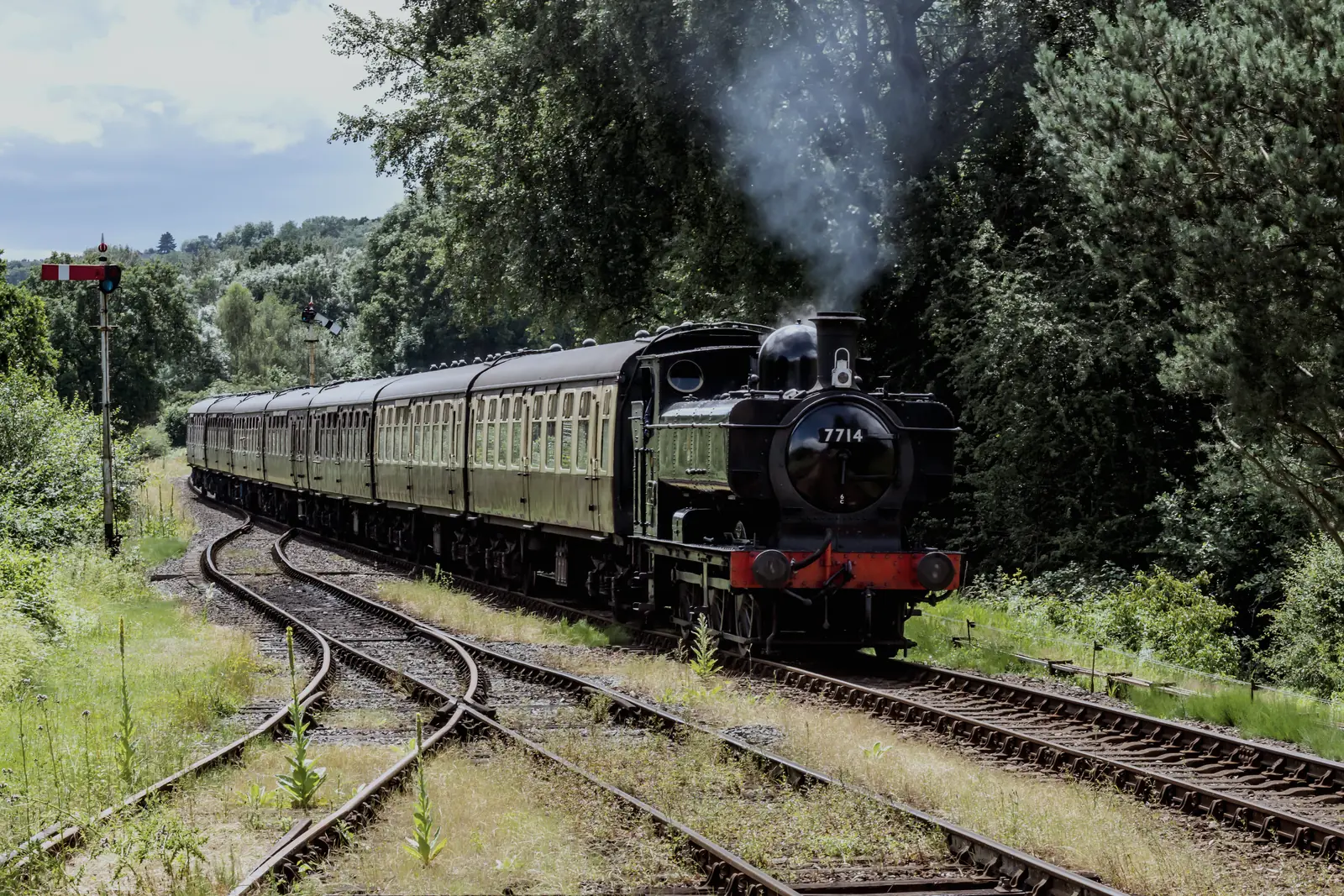
A tank engine and four carriages running towards the junction on a summer afternoon, a semaphore signal standing at danger on the left and a set of points in the foreground.

Calder & Thrushmoor Railway · Box No. 21

Sixteen levers, and a rule about every one of them.

A timber-on-brick junction box of 1897, shut in 1968, opened again in 2004, and still worked by the frame it was built around. The locking has never been altered.

Built
1897 · C&TR Type 3
Frame
32 levers, 16 in use
Locking
Tappet, original
Listing
Grade II, 1989
Open
2nd Saturday, 10–4
§ 01 — THE FRAME

The frame does not tell you off. It simply will not move.

Pull a lever and the frame either lets you, or it explains itself. Start with 14, then 13: nothing that moves a train will answer until the gates are across the road and bolted.

Track diagram for Hollowgate Junction: the Down and Up Main lines, the Quarry Branch diverging at points 4, a crossover, a goods shed siding, and the level crossing at Hollowgate Lane. 2 1 7 8 9 12 10 FROM THRUSHMOOR BANK DOWN MAIN UP MAIN QUARRY BRANCH QUARRY JUNCTION TO CALDERFOOT GOODS SHED HOLLOWGATE LANE 4 · 5 6 15 13 · 14
Down line · block
Normal
Up line · block
Normal
Facing point lock 5
Free
Hollowgate Lane gates
Across the line

The frame says

Frame normal

Every lever is standing in the frame and every signal is at danger.

Read the locking
The locking table this frame is working from

Calder & Thrushmoor Railway — Hollowgate Junction — locking table

What a lever needs, it holds.

Tappet locking is one relationship read in two directions. A lever cannot be pulled until the levers in its holds column are already standing as shown — and the moment it is pulled, those are exactly the levers it pins there. Both marks the one relationship that refuses to be mutual: a facing point lock has to go in whichever way the points are lying, so 5 holds 4 in either direction and 4 does not hold 5 back. Nothing in this table was typed out by hand; it is printed from the same array of numbers the frame above is working from, which is the only way to be sure the two agree.

WorksHoldsHeld by
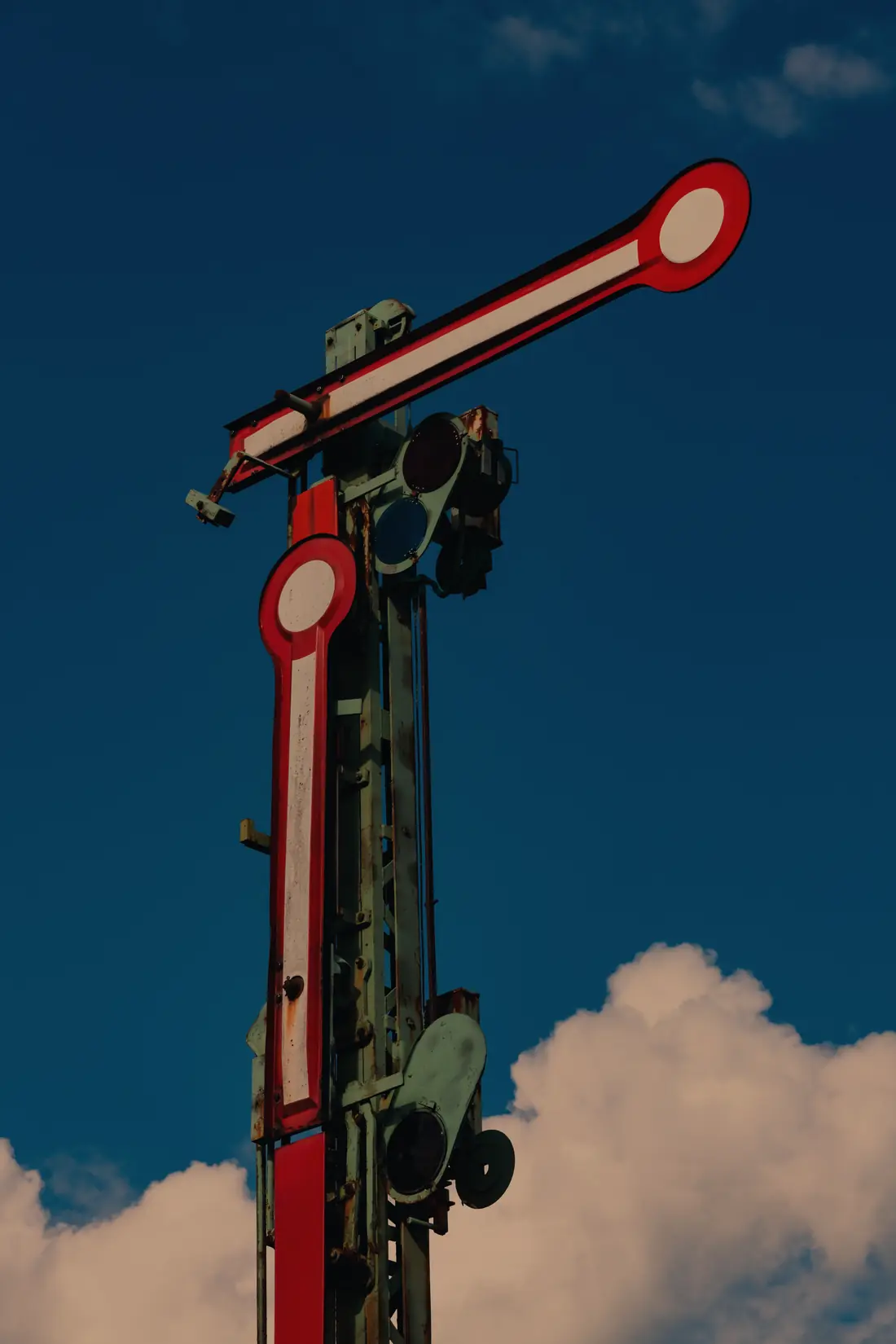
Two semaphore arms on one post against a deep sky: the upper arm horizontal, the lower arm raised.
§ 02 — THE ARM

A lever is a question. The arm is the answer.

Nothing in the box tells a driver anything. The levers pull wires, the wires pull arms, and the arm on the post a quarter of a mile away is the only thing anyone on the train ever sees. When we say a signal is off, we mean an eight-foot length of painted timber has moved.

Stop · on
Horizontal. Red arm, white stripe. Stop, and do not pass.
Stop · off
Dropped. The line to the next stop signal is yours.
Distant · on
Horizontal, fishtailed and yellow. Be ready to find the next stop signal at danger.
Distant · off
Dropped. Every stop signal ahead of it is already off. This is why 2 is the last lever pulled and the first put back.
§ 03 — THE TRUST

Four things we do, and one we don’t.

We are twenty-two volunteers and one paid fitter. We do not run trains — we keep one box, and we help other people keep theirs.

01

Open days

Second Saturday of the month, ten until four. Climb the twenty-three steps, stand at the frame, ask the duty signalman anything. Children are welcome and are usually better at the locking than their parents.

Free · donations to the boiler fund

02

Two hours at the frame

A supervised session working the box under a passed signalman: block bells, train register, the full sequence for a Down train and a branch move. Four people maximum, because there is only one frame.

£45 a head · booked by enquiry

03

The interlocking day

A one-day class in mechanical locking for volunteers, modellers and new signalling staff. Morning on tappets, locking trays and dog charts; afternoon proving a locking table against a real frame.

£120 · six dates a year

04

Frame overhaul

We survey, strip, re-bush and re-lock frames for other preserved boxes, and we draw the locking table to go with them. Eleven boxes since 2011, the furthest in Caithness.

Quoted per frame · survey first

§ 04 — ABSOLUTE BLOCK

The other half of the job is a bell.

The frame keeps the junction safe. The block bell keeps the line safe — one train in one section at a time, agreed beat by beat with Thrushmoor Bank and Calderfoot. Codes are rung, repeated back, and written down before anything is pulled.

CodeRung byMeaning
1 Either box Call attention. Nothing happens on the block until this is acknowledged.
3–1 Box in rear Is the line clear for a stopping passenger train?
3–2 Box in rear Is the line clear for an express?
1–4 Box in rear Is the line clear for a mineral train? The quarry rings this one four times a day.
2 Box in rear Train entering section. The signal has been pulled and the train is on its way.
2–1 Box in advance Train out of section, complete with tail lamp. The section is yours again.
6 Either box Obstruction danger. Everything stops, and the register records the minute.
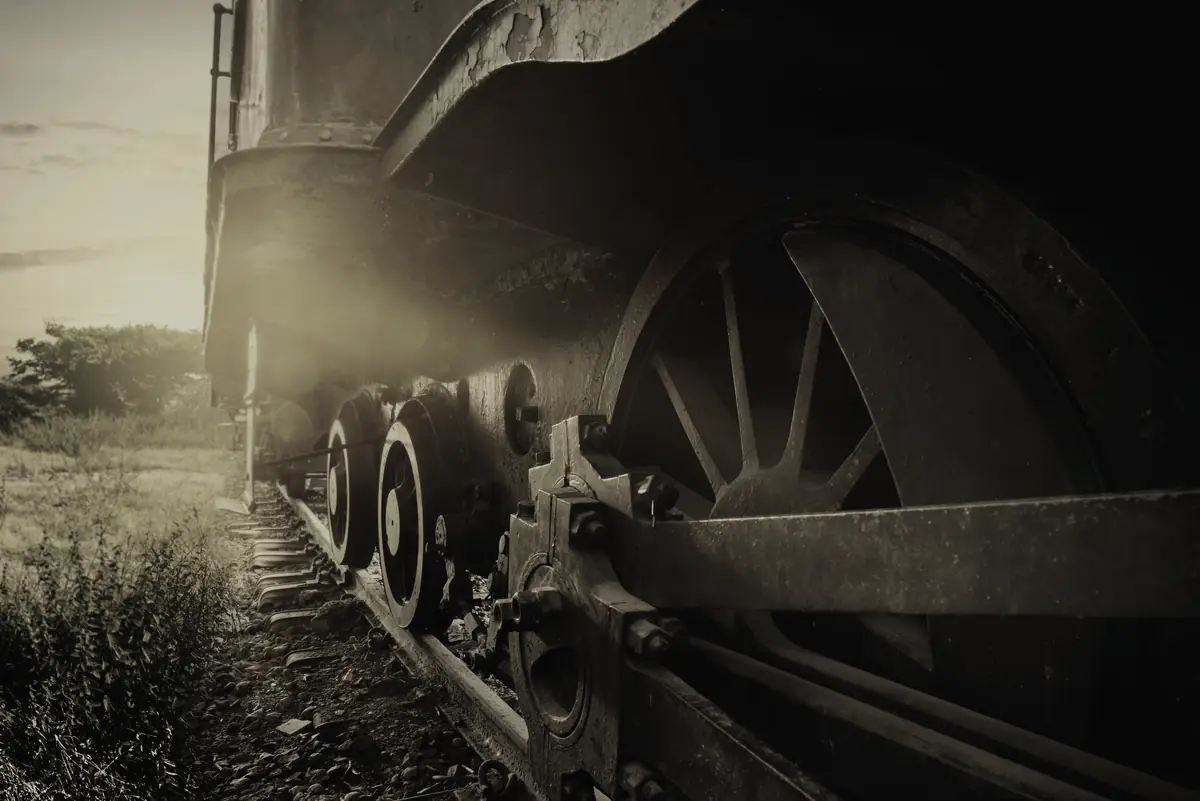
Driving wheels and coupling rod of a standing locomotive, seen low along the rail.
§ 05 — VISITING

Twenty-three steps, and then you can put your hand on it.

The box is open on the second Saturday of every month and by arrangement for groups. It is a working frame in a listed building, so there are stairs, there is no lift, and the kettle is temperamental.

Open days and sessions