BLOOM.
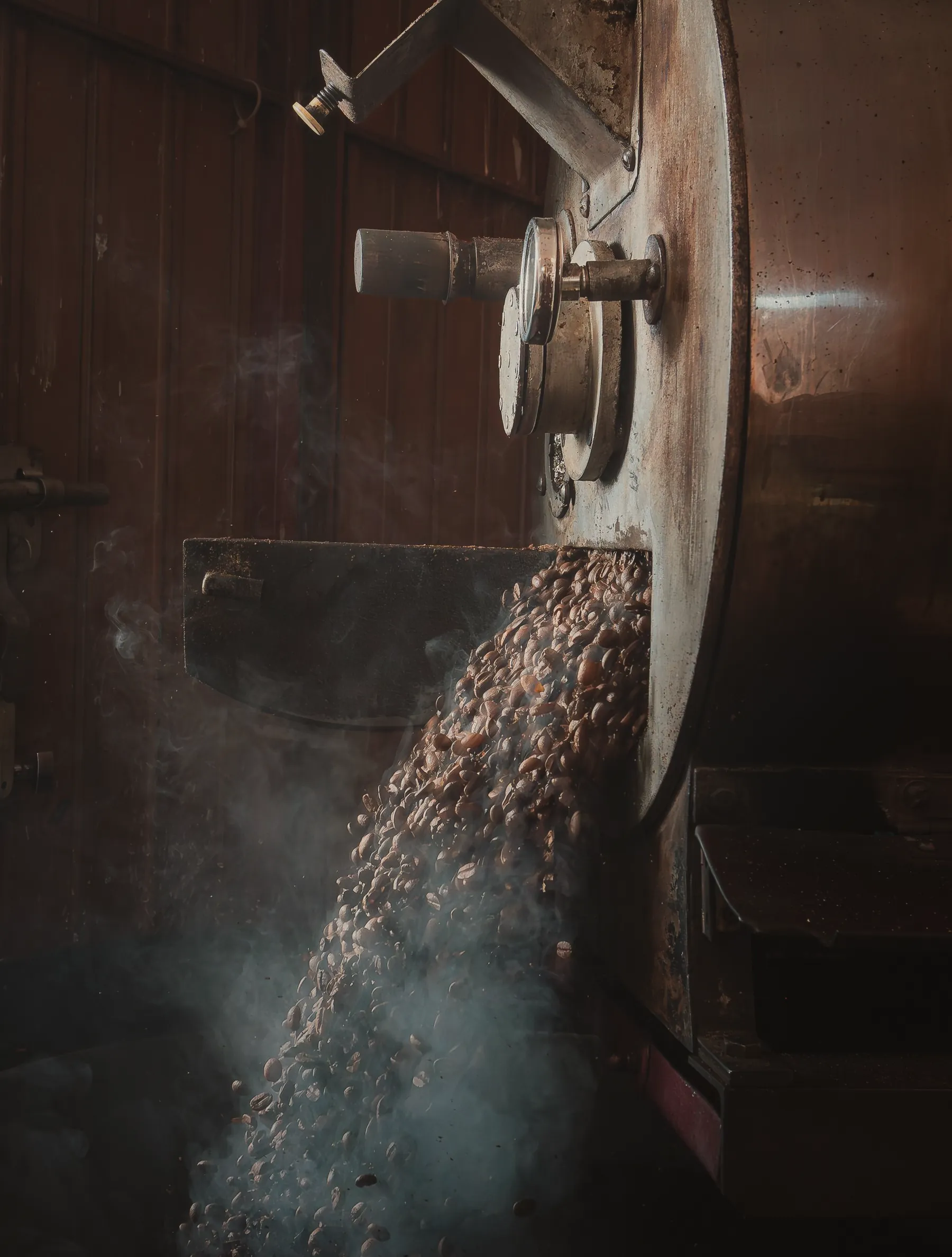
Roasted coffee pouring out of a drum roaster's door into the cooling tray, smoke curling up through the stream of beans.

Monday · 5:40 am · Brunswick

Every bag, a Monday.

The drum is lit at twenty to six. By noon 247 bags are sealed and stamped, and by Tuesday afternoon they are in the post.

Batches
6 × 12 kg
Roast
11 min 40 s
Drop
204 °C
Cooled
4 min

The roast

Light, and the same every week.

One coffee means one roast profile, and fifty-two chances a year to get it exactly the same. We roast it light, for filter, and pull it at 204 °C, about ninety seconds after first crack.

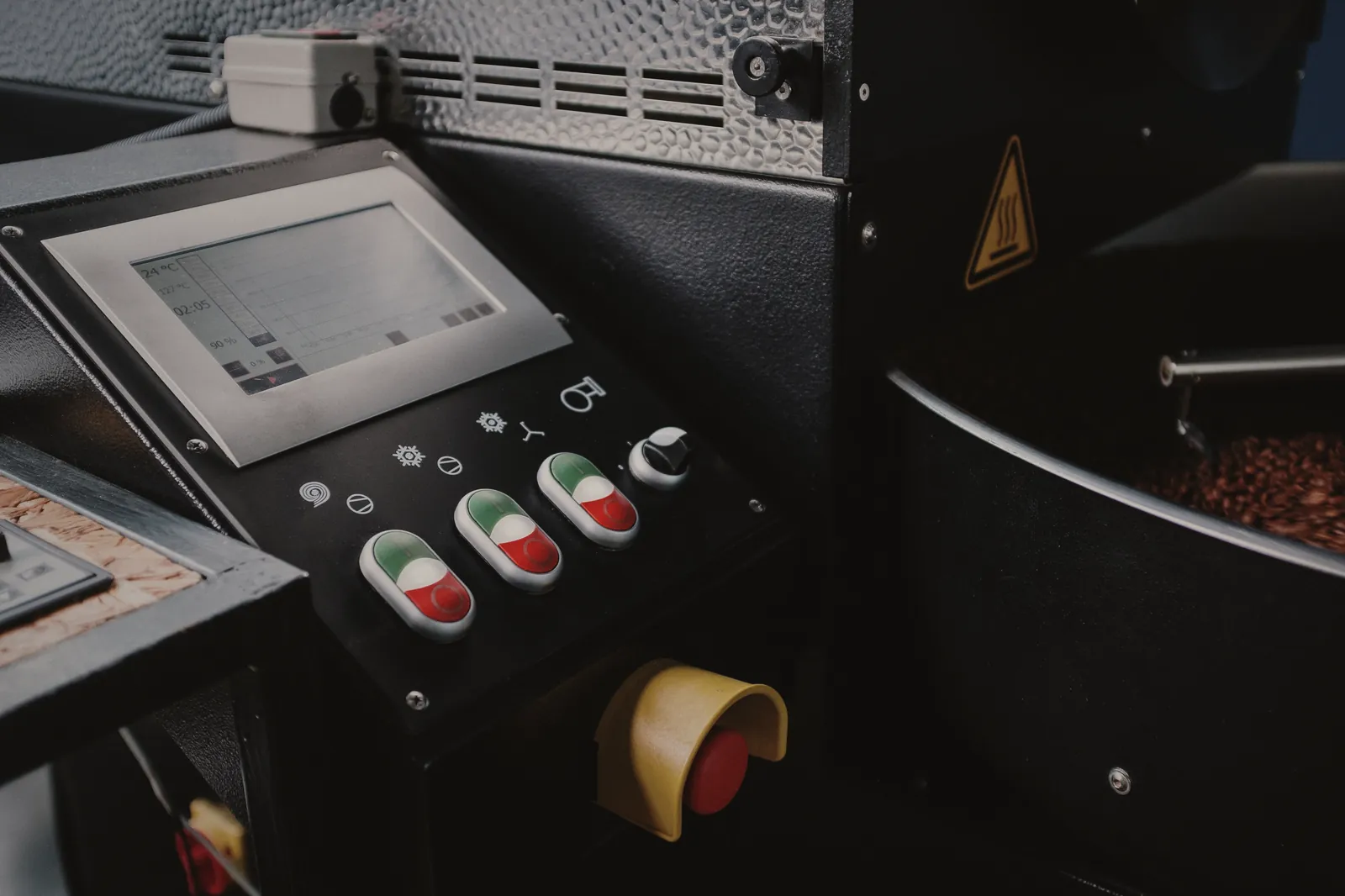
The roaster's control panel: a screen tracing the roast curve, start and stop buttons, and the red emergency stop.
The curve on that screen is the one in the log.

Six batches, one log

Every batch is logged against the one before it: charge temperature, time to first crack, time from crack to drop. If batch five runs eight seconds long, it goes in the log and someone finds out why before next Monday.

We do not blend batches to average them out. Each bag carries its batch number beside the date.
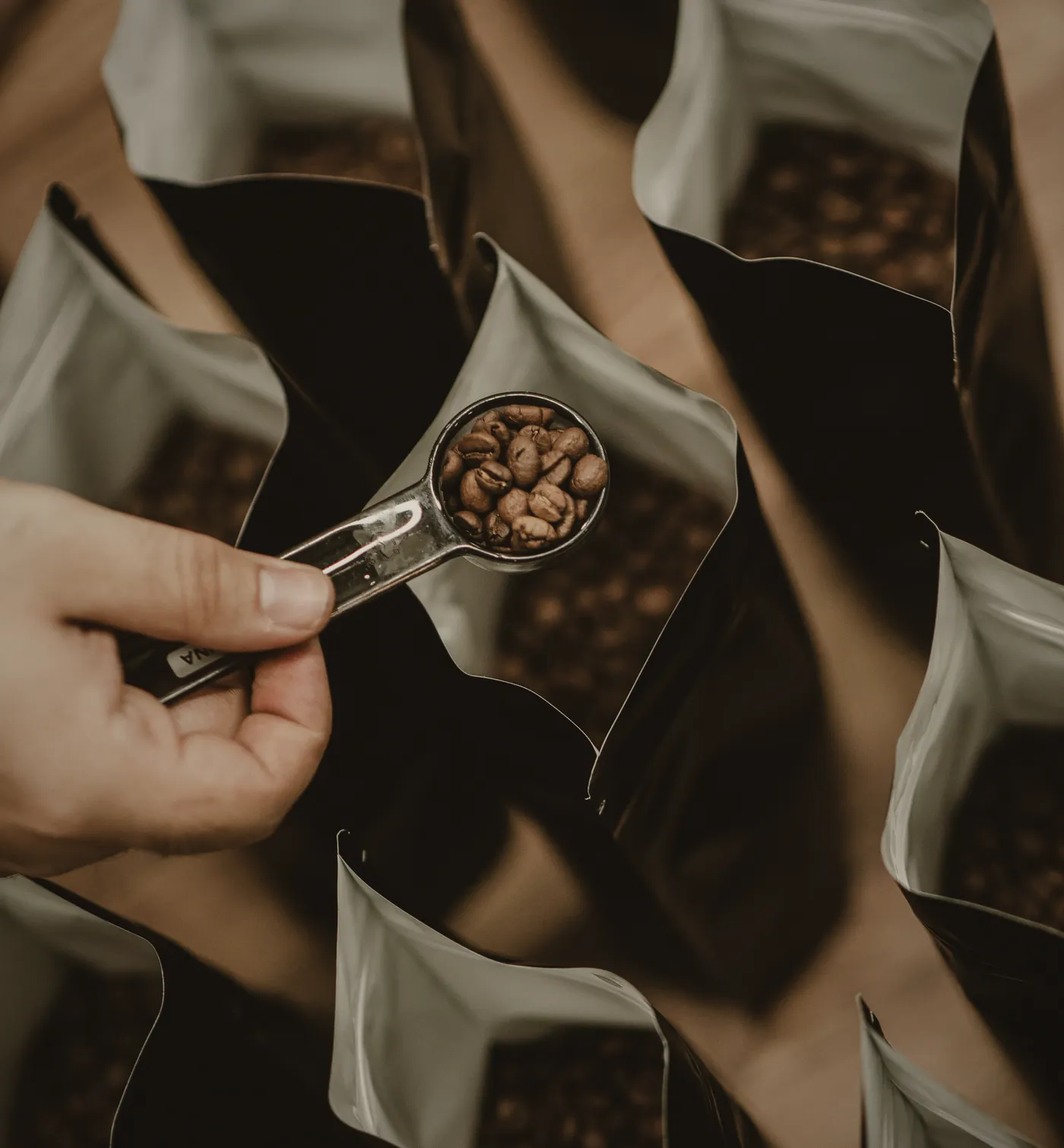
Looking down on a row of open foil valve bags as a steel scoop tips roasted beans into one of them.
Filled by the scoop, weighed to the gram.

Sealed before lunch

Beans rest in open bins for two hours to let the first rush of gas out, then go into valve bags: the gas can leave, air cannot get in.

The date goes on in red by hand, because a printed date is the easiest thing in the world to leave on a bag for a year.

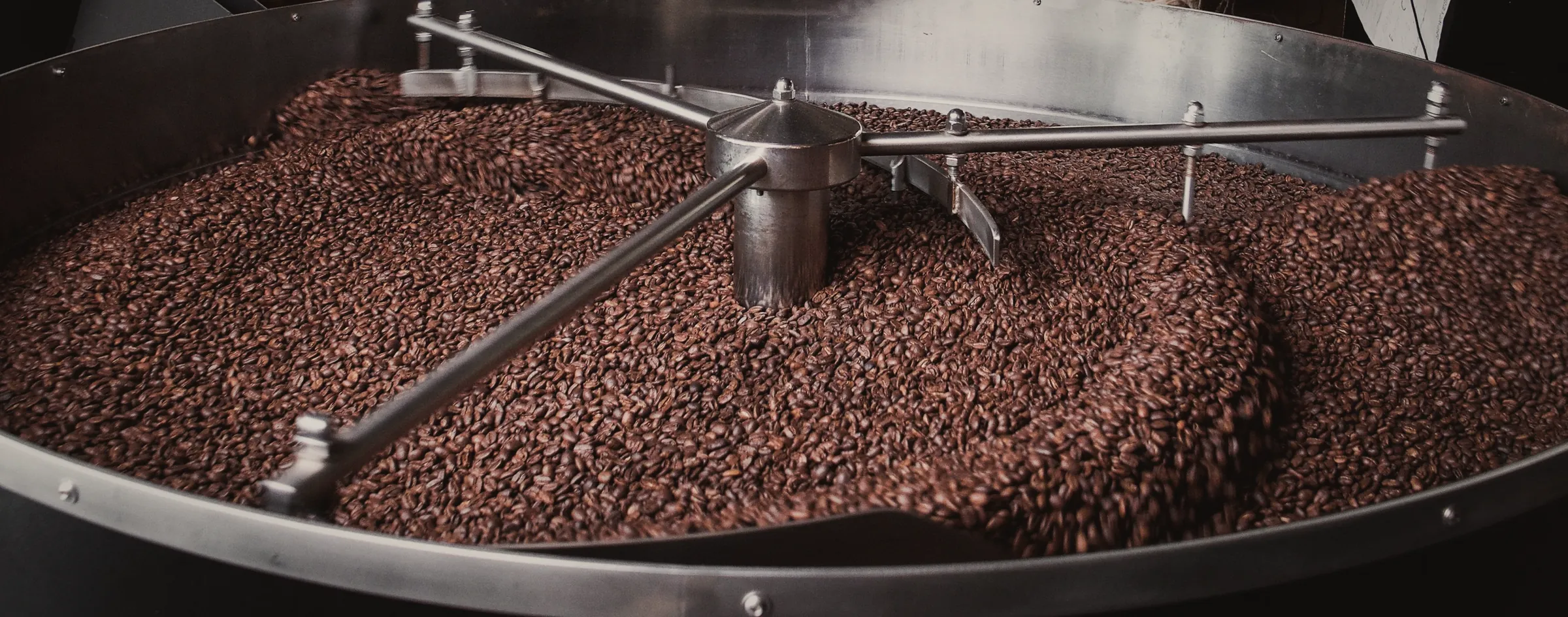
A steel cooling tray full of freshly roasted beans, stirring arms reaching across it.
Four minutes in the cooling tray, then into the bins to rest.

The measurement

Every Monday we brew the last five roasts.

One dose from the new roast, and one from each of the four before it, bloomed side by side with 15 g of grounds and 45 g of water at 94 °C. We read the rise off a steel rule at the centre of the bed and time how long the dome holds above half its height. Three lots of those readings give the curve below; the simulation on the home page runs on it.

Carbon dioxide left in the beans, by days since roast A falling curve: 91 per cent on day 4, 34 per cent on day 30, 8 per cent on day 60 and 2 per cent on day 90. Days 4 to 30 are shaded as the window we drink it in. 0%25%50%75%100%0153045607590days since roast the month we drink it in Day 4 · 91%Day 30 · 34%Day 60 · 8%
From the Monday brews
AgeCO₂ leftRise, mmHeld, s
Day 198%10.845
Day 491%10.142
Day 783%9.439
Day 1465%7.632
Day 2149%6.026
Day 3034%4.319
Day 4517%2.313
Day 608%1.210
Day 902%0.38

Brighter rows are the month we would drink it in: day 4 to day 30.

Whole bean only

We will not grind it for you.

Grinding opens up the inside of the bean. The gas that would have taken a month to leave a whole bean is mostly gone from ground coffee within the hour, and it takes the aromatics with it.

A bag we ground on Monday would bloom on Thursday like the one on the right of the home page. A cheap burr grinder does more for your coffee than anything we could do in the roastery.

The green room

The rest of the lot waits, green, at 17 °C.

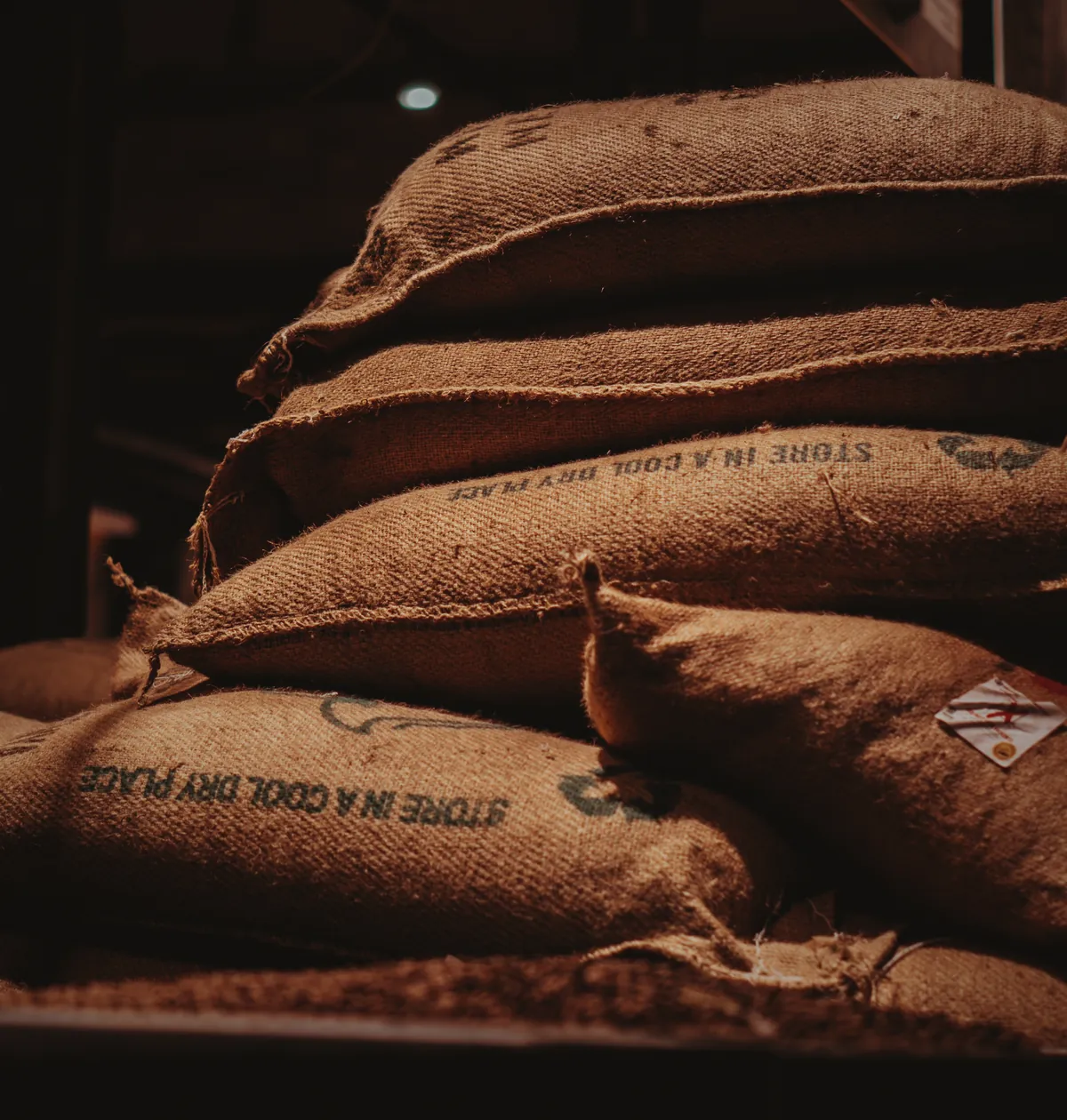
Jute sacks of green coffee stacked in a dim storeroom.
Lot 03, sacks 31 to 50.

Cool, dark, and dry

Green coffee is a seed, and it keeps like one. In lined sacks, in a room held at 17 °C and 55 per cent humidity, it will taste almost the same in March as it did when it landed.

Each Monday we weigh out 72 kilos, and that is the only coffee in the building that is ever older than a week.

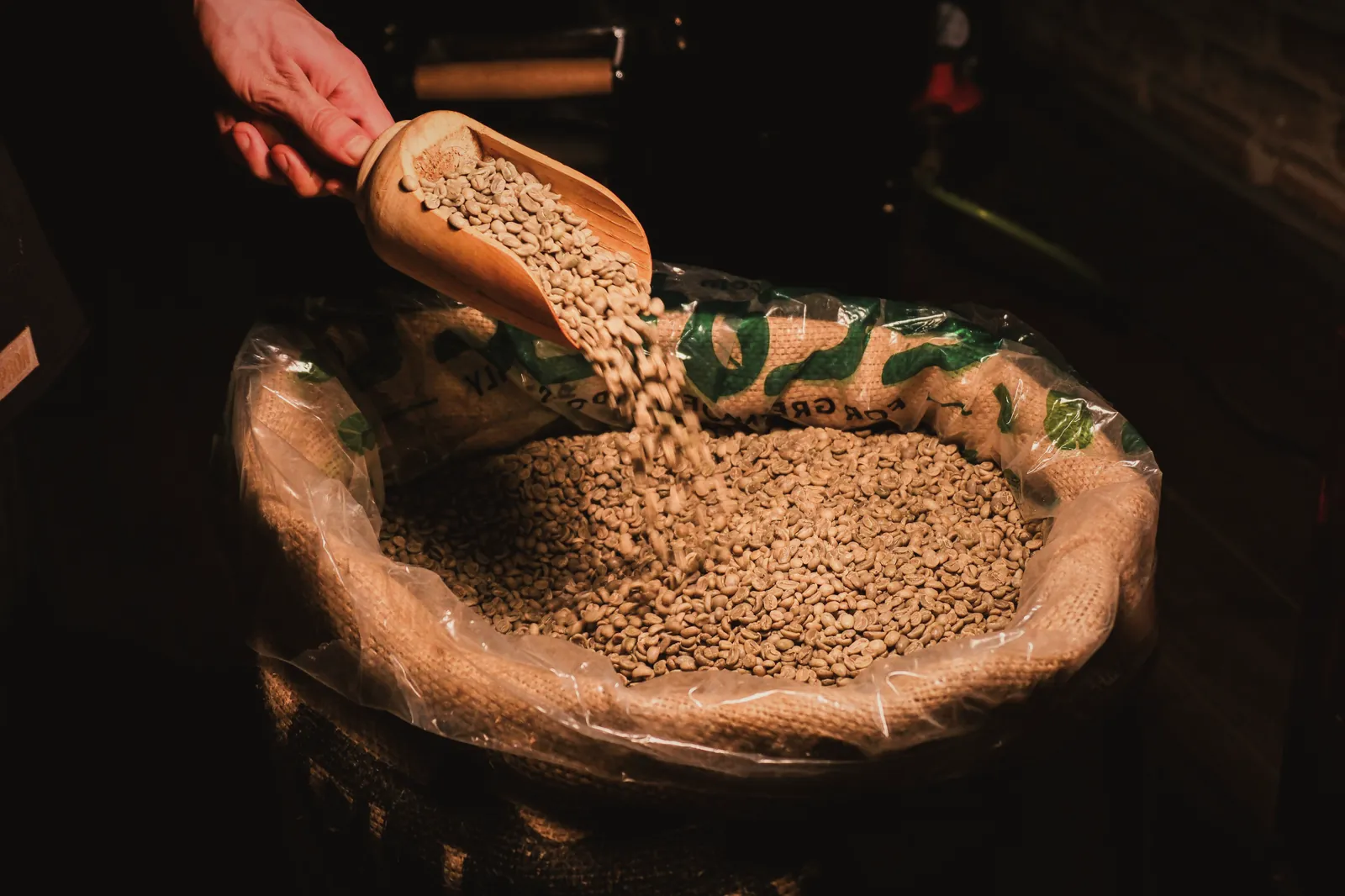
A metal scoop pouring pale green coffee beans into a lined sack, in low light.
Weighing out batch one.

Keeping it at home

  • Keep it in the bag it came in, valve up, rolled down tight.
  • Out of the sun and away from the kettle. Not in the fridge: it sweats every time you take it out.
  • If it is going to last you longer than a month, freeze half of it on the day it arrives, in a jar, and do not refreeze it.
Order for the next Monday